Outbound Calls: Definition, Types & Best Practices


Outbound calls are an important communication method where businesses proactively contact prospects or customers for purposes such as sales, lead generation, and customer engagement.
When managed effectively, outbound calls help organizations expand their reach, generate new opportunities, and strengthen relationships with existing customers.
In this article, we’ll explore what an outbound call is in detail, the different types of outbound calls, and the best practices businesses can use to manage outbound calling campaigns more effectively.
Highlights:
An outbound call is a telephone call initiated by a business representative or agent to a customer or prospect, rather than receiving one.
Businesses make outbound calls for sales outreach, lead generation, appointment setting, and customer follow-ups.
The difference between outbound and inbound calls is that outbound calls are initiated by businesses to contact customers or prospects, while inbound calls are initiated by customers who contact the business for support, information, or assistance.
For effective outbound calling, features such as automated dialers, CRM (Customer Relationship Management) integration, voicemail drop, click-to-dial, call recording, analytics, call scripting, and caller ID display are essential.
To evaluate the success of your outbound calling campaigns, you should monitor key metrics such as call volume, connection rate, conversion rate, average handle time, first-call close rate, and follow-up rate.
Effective outbound calling requires clear objectives, thorough preparation, personalized messaging, optimal call timing, the use of the right tools, and consistent follow-ups to maximize engagement and improve overall campaign success.
What are Outbound Calls?
Outbound calls are phone calls initiated by a business or organization to contact customers, prospects, or partners. In this type of communication, the call starts from the company’s side, usually through sales representatives, support agents, or automated calling systems.
How Do Outbound Calls Work?
A business makes an outbound call to a customer using a business phone system or automated dialing software. Then, the call is routed through the telecom network, and once the customer answers, they are connected to a live agent or an automated message for communication.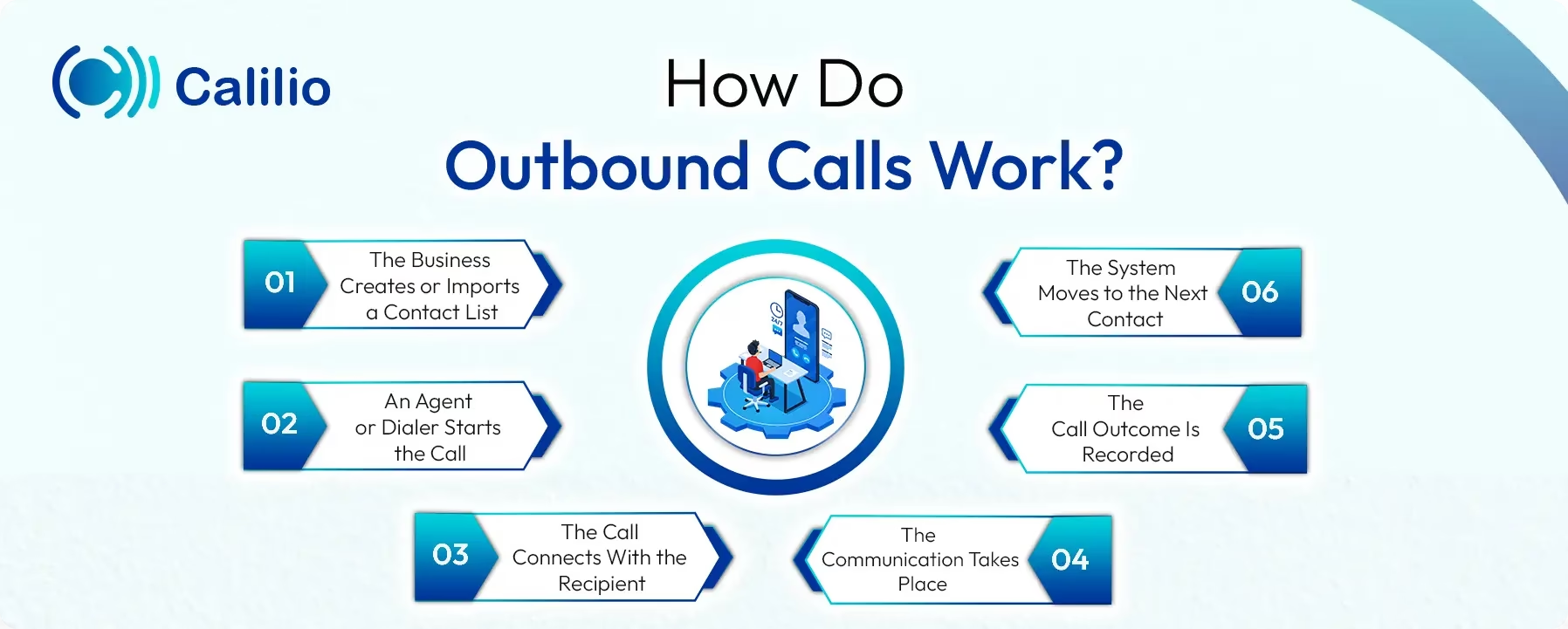
Step 1: The Business Creates or Imports a Contact List
The process begins when the business or sales team prepares a list of contacts. This list may include leads, existing customers, or prospects stored in a CRM system, marketing database, or contact management tool.
Step 2: An Agent or Dialer Starts the Call
An agent manually dials the number, or an auto-dialer automatically initiates the call from the contact list.
Step 3: The Call Connects With the Recipient
The call is placed, and the recipient’s phone rings, but it is only considered successfully connected when the recipient answers. If the recipient does not answer, the call may be redirected to voicemail depending on the recipient’s phone settings.
Step 4: The Communication Takes Place
Once the recipient answers and the call connects, the interaction begins. In manual calls, an agent speaks directly with the recipient, while in AI outbound calling, an automated system delivers a recorded or pre-programmed message.
Step 5: The Call Outcome Is Recorded
After the call ends, the result of the interaction is recorded. This may include information such as call status, notes, call duration, or follow-up actions.
Step 6: The System Moves to the Next Contact
Finally, the agent or automated dialer proceeds to the next contact on the list, repeating the process until the campaign or call list is completed.
What are the Types of Outbound Calls?
The main types of outbound calls include cold calls, warm calls, lead generation calls, appointment setting calls, follow-up calls, customer support calls, and market research and survey calls.
1. Cold Calling
Cold calling involves contacting potential customers who have no previous interaction with the business. The purpose of these calls is to introduce a product or service, identify potential interest, and qualify the prospect for further sales engagement.
2. Warm Calling
Warm calling targets individuals who have already shown some level of interest in the company. These prospects may have filled out a form, subscribed to a newsletter, downloaded a resource, or interacted with the brand in some way. Since the recipient already recognizes the business, warm calls usually result in more productive conversations.
3. Lead Generation Calls
Lead generation calls are made to collect information and qualify prospects rather than immediately make a sale. During these calls, agents ask questions to understand the prospect’s needs, budget, and potential interest in the product or service.
4. Appointment Scheduling Calls
Appointment scheduling calls are used to arrange meetings, consultations, interviews, or product demonstrations with potential customers or candidates. These calls are common in both B2B (Business to Business) sales, where detailed discussions are needed before a purchase decision, and in recruitment processes to schedule job interviews or screening calls.
5. Follow-Up Calls
Follow-up calls are made to reconnect with prospects or customers after a previous interaction. Businesses use these calls to provide additional information, answer questions, address concerns, or move the prospect further along the sales process.
6. Customer Support Calls
Customer support calls are outbound calls made to assist existing customers, provide updates, or resolve issues related to a product or service. These calls help businesses maintain customer satisfaction and improve the overall customer experience.
7. Market Research and Survey Calls
Businesses also conduct survey calls to collect feedback and insights from customers or target audiences. These calls help organizations understand customer preferences, measure satisfaction levels, and gather information that can guide future business decisions.
8. Other Types of Outbound Calls
In addition to the core types, businesses use other outbound calls, such as sales discovery calls to understand customer needs and win-back calls to re-engage inactive customers. They also use upsell and cross-sell calls to promote additional products, along with collections calls to recover payments. Promotional or product launch calls share new offers, while NPS or feedback calls measure customer satisfaction.
What is the Difference Between Outbound & Inbound Calls?
The difference between inbound and outbound calls lies in who initiates the communication and the purpose of the interaction. Inbound calls are initiated by customers seeking support or information, while outbound calls are initiated by businesses to contact prospects or clients for purposes such as sales, follow-ups, or outreach.
Aspects | Inbound Calls | Outbound Calls |
| Who initiates the call | The customer initiates the call | The business initiates the call |
| Purpose | Customers call to get support, information, or assistance | Businesses call for sales, follow-ups, marketing, or customer outreach |
| Agent Role | Solve problems, answer questions, and provide assistance | Promote services, generate leads, or reconnect with customers |
| Customer Awareness | The customer already knows about the company or service | The customer may or may not know about the company |
What are the Common Challenges in Handling Outbound Calls?
Common challenges in outbound calling include low answer rates, as many people do not pick up unknown calls, and high agent turnover due to constant rejection. Other difficulties include delivering a clear and personalized message quickly while keeping the conversation engaging.
- Low Answer Rates and Spam Labeling: Many prospects ignore calls from unknown numbers, which lowers connection rates. Frequent or aggressive dialing can also cause numbers to be flagged as “spam” or “scam likely,” making it even harder for agents to reach potential customers.
- Agent Burnout and Turnover: Outbound calling often involves repetitive tasks and frequent call rejections. Combined with pressure to meet performance targets, this can lead to stress, reduced motivation, and higher employee turnover.
- Regulatory Compliance: Businesses must follow regulations such as the Telephone Consumer Protection Act (TCPA) and Do Not Call (DNC) registries. Failing to comply with these rules can result in legal penalties and fines.
- Poor Data Quality: Outdated contact lists, incorrect phone numbers, or missing customer context can reduce calling efficiency. Poor data makes it difficult for agents to reach the right prospects and have meaningful conversations.
- Inefficient Dialing Methods: Manual dialing slows down the calling process and reduces the number of successful connections per hour. Without automated dialing systems, agents spend more time dialing rather than engaging with prospects.
- Difficulty Handling Objections: Agents may struggle to respond effectively to customer objections during cold calls. Without proper training or preparation, these interactions often lead to unproductive conversations.
Outbound Calling Metrics You Should Track
Outbound calling metrics include call volume, connection rate, conversion rate, Average Handle Time (AHT), first-call close rate, and follow-up rate, which help businesses measure the performance and success of their calling campaigns.
- Call Volume: Call volume refers to the total number of outbound calls made by agents within a specific period. Tracking this metric helps businesses understand agent productivity and the overall activity level of the outbound campaign.
- Connection Rate: Connection rate measures the percentage of calls that successfully reach a live person instead of voicemail or unanswered calls. A higher connection rate indicates better call timing, accurate contact lists, and effective dialing strategies.
- Conversion Rate: Conversion rate shows the percentage of calls that result in a desired outcome, such as a sale, appointment, or qualified lead. This metric helps evaluate how effective agents are at turning conversations into successful results.
- Average Handle Time (AHT): Average handle time measures the average duration of a call, including conversation and any follow-up work. Monitoring AHT helps managers understand call efficiency and identify opportunities to improve agent performance.
- First-call Close Rate: This metric tracks how often agents successfully complete the desired objective during the first interaction with a prospect. A higher first-call close rate indicates strong communication and sales skills.
- Follow-up Rate: Follow-up rate measures how often agents schedule or complete follow-up calls with prospects after the initial conversation.
What are the Essential Features to Have for Outbound Calling?
Outbound calling requires tools such as automated dialing systems, CRM integration, voicemail drop, and click-to-dial to improve agent efficiency and streamline call workflows. Features like call monitoring, analytics, call scripting, and caller ID display further help monitor performance, maintain quality, and increase successful connections with prospects.
1. Automated Calling System
An automated calling system, also referred to as an outbound dialer, automatically dials phone numbers from a prepared contact list without requiring agents to dial manually. This allows agents to spend more time speaking with prospects and improves the overall efficiency of outbound calling campaigns.
2. CRM Integration
CRM integration allows outbound calling systems to connect with customer databases and synchronize information instantly. Agents can view customer details, update records, and log call activities during the conversation. This helps create more personalized interactions and keeps customer data organized.
3. Voicemail Drop
Voicemail drop enables agents to leave a pre-recorded voicemail message with a single click when a call goes unanswered. This saves time compared to recording a message manually for every call. It also ensures consistent messaging while allowing agents to quickly move on to the next call.
4. Call Recording and Monitoring
Call recording allows businesses to save conversations between agents and customers for review and training purposes. Managers can also monitor live calls and provide coaching through call whisper. This feature helps improve service quality and agent performance.
5. Analytics and Reporting
Analytics and reporting tools provide real-time insights into outbound call performance. Businesses can track Key Performance Indicators (KPIs) such as call volume, connection rates, and agent productivity. These insights help managers evaluate campaigns and make informed improvements.
6. Click-to-Dial
Click-to-dial allows agents to start a call directly from a CRM system or web browser with a single click. This removes the need to manually enter phone numbers, saving time and reducing dialing errors.
7. Call Disposition and Notes
Call disposition allows agents to quickly record the outcome of each call, such as successful contact, voicemail, or follow-up needed. Agents can also add notes about the conversation for future reference. This information helps improve data analysis and supports better follow-up strategies.
8. Call Scripting
Call scripting tools provide agents with on-screen scripts and suggested responses during conversations. These scripts help agents communicate clearly and handle customer objections more effectively.
9. Custom Caller ID
Custom caller ID allows businesses to display a recognizable local phone number or name when making outbound calls. This increases the chances of the call being answered, builds trust with recipients, and improves overall connection rates.
Boost Your Outbound Calling Campaigns with an AI-Powered Phone System!
Best Practices for Effective Outbound Phone Calls
Effective outbound calling requires proper preparation, clear communication, and a strong understanding of the prospect’s needs. Using the right timing, personalized conversations, and performance tracking helps improve connection rates and increase successful outcomes.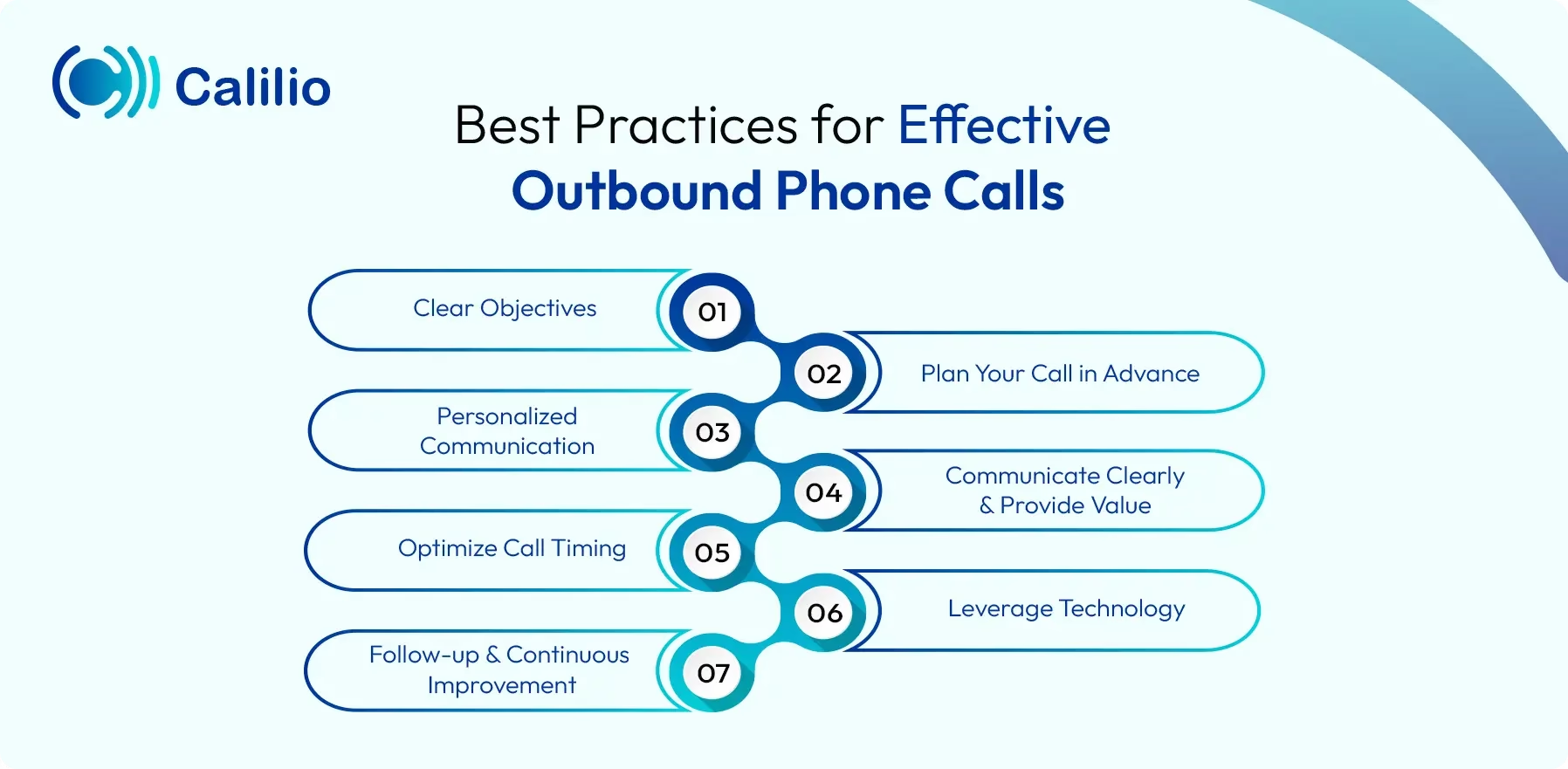
- Clear Objectives: Agents should define the purpose of the call before contacting prospects, such as promoting a product, scheduling an appointment, or following up with a customer. Having clear goals keeps the conversation focused and increases the chances of a successful outcome.
- Plan Your Call in Advance: Prepare a clear objective and key talking points before making a call. Having a pre-call plan helps agents stay focused and communicate more effectively.
- Personalized Communication: Use customer data or previous interactions to tailor the message during the call. Personalized conversations help build trust and improve engagement with prospects.
- Communicate Clearly and Provide Value: Start the call with a clear introduction and quickly explain the purpose of the conversation to respect the prospect’s time. Instead of focusing only on product features, highlight how your solution can address a specific problem or deliver value to the customer.
- Optimize Call Timing: Choosing the right time to call significantly increases the chances of connecting with prospects. Studies suggest that mid-week days and late morning or late afternoon hours often provide better response rates.
- Leverage Technology: Using tools such as auto dialers, CRM systems, and voicemail drop can improve efficiency and reduce idle time.
- Follow-up and Continuous Improvement: Successful outbound calling requires clear follow-up actions after each conversation. Tracking key performance metrics and reviewing recorded calls helps teams improve strategies and enhance agent performance over time.
Conclusion
Outbound calls serve as an effective way for businesses to connect with potential customers, generate leads, and create new sales opportunities without waiting for customers to initiate contact. With proper planning, trained agents, and the right resources, outbound calling can become a productive strategy for driving customer engagement and supporting business growth.
However, running successful outbound calling campaigns requires essential features such as automated dialing, CRM integration, call recording and monitoring, analytics and reporting, call disposition tracking, and caller ID customization.



Summarize this blog with:
Frequently Asked Questions
How many calls should I make a day?
40–100 calls per day is a common benchmark for outbound sales professionals, though the ideal number may vary based on call complexity, industry, and campaign goals.
Is there a free power dialer?
How do I handle objections during calls?
How can I avoid burnout during long calling hours?

Still have questions?
Can’t find the answer you’re looking for? Please chat with our friendly team.
Stay in the loop
Get the latest call insights, trends, and updates delivered straight to your inbox.
By subscribing, you agree to receive updates from Calilio.
You can unsubscribe anytime.
Enter the World of AI Business Phone System with Calilio
Improve your business operation with Calilio's advanced virtual phone system. Join today for a better way to connect.