- Partners
- Contact Us
- Log in
How to Forward SMS on iPhone & Android to WhatsApp or Other Platforms?

Forwarding a text message means taking an existing SMS or MMS and sending it to another recipient. It’s a quick way to share information like directions, updates, or even jokes. Plus, in professional settings, it plays a key role in ensuring messages like client queries, confirmations, or alerts reach the right person at the right time.
There are a few different ways to forward a text message depending on your needs. You can either forward messages one at a time or use tools that automatically share your texts with another device, email, CRM systems, or apps like Slack.
So, let’s learn how to forward text messages across iPhone, Android, email, and other platforms. Additionally, we’ll explore automated solutions and smarter alternatives like Calilio to help you streamline message forwarding and stay consistently connected.
Key Highlights:
Forwarding text messages allows you to easily share SMS across iPhone, Android, texting apps, email, or platforms like Slack and CRM systems for better communication flow.
While manual forwarding is built into Android and iPhone, automatic SMS forwarding typically requires third-party apps or workarounds due to platform limitations.
Advanced text forwarding methods, such as using third-party apps or CRM integrations, enable forwarding messages to email, messaging apps, or business tools, helping teams manage and respond to texts more efficiently.
Common challenges in forwarding SMS include carrier restrictions, formatting errors, syncing issues, and network problems, which can usually be resolved with simple adjustments.
How to Forward Text SMS on Android
To forward an Android’s text messages, simply go to the messaging app, open the conversation and long-press on the message you want to forward. Then, tap on three vertical dots on the top right corner for the options and select Forward and enter the phone number or select one or more contacts to forward the message. Lastly, press Send, and the text will be forwarded to the number.
However, Android does not support built-in auto-SMS forwarding, so you need to install third-party SMS forwarding apps like SMS Forwarder, AutoForward Text, or PhoneLeash.
Here are the detailed steps to forward SMS automatically on an Android.
Automatic Method
- Download and install an SMS forwarding app from the Play Store.
- Open the app and grant the necessary permissions.
- Tap on Add Rule or Set Up Forwarding (depending on the app).
- Enter the phone number you want to forward your messages to.
- Customize filters if needed. For instance, forwarding messages from a specific contact or with a specific keyword.
- Save the settings, and the app will automatically forward incoming SMS to the chosen number.
Note: Although most third-party apps claim to support automatic SMS-to-SMS forwarding, this service is limited, risky, and against the privacy policies. So, the apps may not work efficiently.
How to Forward Text Messages on iPhone
To forward text from an iPhone, simply long-press the text bubble in your conversation and tap More. Then, press the forward arrow in the bottom right, and enter your recipient’s name or number. It’s the fastest way to manually pass along a detail without changing any settings.
However, if you want to forward all the text messages automatically, you can use the following methods.
Automatic Method
You can forward incoming text messages automatically to another number by using a built-in tool called “Shortcuts” or by installing third-party apps. This is because iOS doesn't have an auto-forwarding feature for external numbers due to its privacy policy.
Using Shortcuts App
- Open the Shortcuts app and select the Automation tab at the bottom.
- Tap New Automation and select Message.
- In the “Sender” section, choose to forward SMS from Any Sender or specific contacts.
- In the “Message Contains” section, you can choose SMS with specific keywords like “OTP” or simply a space for forwarding all the messages.
- Set it to Run Immediately so it doesn't ask for permission every time, and go to Next.
- Choose “Create New Shortcut” and select Send Message.
- Tap the Message section highlighted in blue and press on “Select Variable”. After that, select “Shortcut Input”.
- In the Recipients section highlighted in blue, choose one or more contacts or simply type the phone number.
- Tap on the blue tick and your automation is complete.
Note: The above-mentioned steps are based on iOS 26. So, the steps may vary depending on the iOS version of your iPhone.
Using Third-Party Apps
To forward SMS automatically on an iPhone, you can also use third-party apps similar to those on Android. So, simply download the app from the App Store. Then, open the app and grant the necessary permission. After that, tap on “Add Rule” and enter the number where you want to send the incoming messages. Lastly, save the settings, and your text messages will be forwarded to that contact or phone number.
However, the auto-forwarding service provided by a third party apps may not work properly because the service is against the privacy and security policies.
Native Device Syncing
To forward SMS from your iPhone to your iPad or Mac, use its “Text Message Forwarding” feature. This ensures that when your iPhone receives an SMS, it instantly appears on your other Apple devices.
Here are the detailed steps to set up auto text message forwarding among iOS devices:
- Ensure all your devices are signed into the same Apple Account and that iMessage is turned on.
- Open Settings and scroll down to Apps, then tap Messages.
- Tap Text Message Forwarding. Here, you will see a list of your other Apple devices linked to your account.
- Switch the toggle to ON for every device where you want to receive and send text messages.
Note: If you don't see the "Text Message Forwarding" option, go to Settings > Messages > Send & Receive. Make sure your Apple Account is active for iMessage and that your phone number is checked.
How to Forward SMS to Email
You can forward SMS to email either manually or with the help of third-party apps. Both Android and iPhone let you share individual messages to your email directly from the Messages app. Likewise, dedicated third-party apps allow you to send all incoming texts to an email address, though options on iOS are more limited.
Manual Method
To forward your SMS to email manually on an iPhone, first open the Messages app > long-press the message > More > Forward Arrow > type the email address and send. Likewise, for Android, first open the Messages app. Then, long-press the message > tap the three vertical dots > Share > Gmail > enter the recipient's email address and send.
For iPhone
Here are the detailed steps:
- Open the Messages app and the conversation on your phone.
- Press and hold the specific text message you want to forward.
- Tap More.
- Press the Forward Arrow icon in the bottom-right corner.
- Enter the recipient’s email address.
- Tap Send.
For Android
Here are the detailed steps:
- Open the Message app on your phone
- Long-press the text message you want to forward.
- Press on the three vertical dots on the top right of the message.
- Press the Share option and select Gmail or your mailing app.
- Enter the recipient’s email address and send.
Automatic Method
To forward your messages to an email address automatically, download and install a third-party app. Open the app and allow permissions > go to Settings and add Rules > enter the email address > set filters and save the settings.
Here are the detailed steps:
- Download and install an SMS forwarding app like ‘AutoForward SMS’ from the website or App/Play Store.
- Open the app and grant the required permissions.
- Go to Settings and Add Rules.
- Enter the email address where you want to forward your texts.
- Set filters if needed (like forwarding messages from specific contacts or keywords).
- Save the settings, and all incoming messages will be automatically sent to the email.
Note: Neither iOS nor Android natively supports automatic SMS-to-email forwarding. So, the effectiveness of such apps is very limited due to strict app restrictions.
How to Forward Text Messages to Texting Apps
To forward your SMS to text-messaging apps like WhatsApp, Messenger, or Viber, open the messaging app > select the message > tap Share > choose the app > pick the contact or group and tap Send. However, this is applicable to Android smartphones only because iPhones don’t offer this feature. So, for iPhone, you need to manually copy the text and send it as a new message on WhatsApp.
Here are the detailed steps:
- Open the messaging app.
- Select the SMS you want to forward.
- Tap and hold it to see the available options, or press on the three vertical dots in the top right corner.
- Select "Share" from the menu, and a list of options will appear.
- Tap on the particular app where you want to forward the SMS.
- Locate the individual or group to whom you want to send the message. You can use the search bar or browse through your contacts.
- Tap their name and hit Send.
Note: The steps mentioned above are generalized and may differ depending on the brand or user interface of your device.
How to Forward Text SMS to Slack
To forward your SMS to Slack manually, open the message > long-press and tap Share > choose Slack > select the channel or person > send it. Likewise, to forward text to Slack using third-party apps, download Zapier or IFTTT > install and sign in > connect your messages and Slack > set a forwarding rule and choose the Slack channel.
Manual Forwarding
Here are the detailed steps:
- Open the SMS app on your phone.
- Long-press the message you want to send and click the share option.
- Navigate to the menu and choose Slack.
- Select the channel or person you want to share it with.
- Tap on Send.
Note: You need to have Slack installed on your smartphone for this method.
Using Third-party Apps/Integrations
Here are the detailed steps:
- Download an app like Zapier or IFTTT from their website, Play Store, or App Store.
- Install, open the app, and sign in.
- Connect it to both your phone’s messages and Slack.
- Set a rule like “Forward all incoming SMS to Slack.”
- Choose the Slack channel.
- Once set, the app automatically sends all your SMS messages to Slack.
How to Forward SMS to CRM Software
To forward SMS to CRM software like HubSpot or Salesforce, choose a Voice Over Internet Protocol (VoIP) platform with SMS-to-CRM support > go to Integrations > sign in to your CRM > set forwarding rules and select numbers to sync.
Here are the detailed steps:
- Select a VoIP platform that supports SMS-to-CRM forwarding.
- In the settings, go to Integrations, select HubSpot or Salesforce, and sign in to your CRM account.
- Set up your VoIP system to automatically forward text messages to your CRM.
- Choose numbers and messages to sync.
- Send a test text to ensure it works correctly.
Alternate Method to Forward Text Messages: Using Calilio
For a more professional and reliable approach, Calilio offers a cloud-based solution that replaces manual forwarding with Number Sharing. Instead of duplicating messages across devices, Calilio centralizes your SMS into a shared team inbox, ensuring every text is accessible to the right people instantly without the security risks of third-party apps.
Here are the detailed steps to access SMS through number sharing on Calilio:
- Create your Calilio account and select a dedicated business phone number.
- Go to the dashboard and add team members to your workspace via email.
- Link your team members to the specific phone number under settings.
- Every incoming SMS will now appear in a Unified Callbox, allowing any authorized team member to view and reply in real-time.
Common Issues While Forwarding SMS & Their Solutions
Common SMS forwarding problems often arise due to carrier filters blocking flagged content, incorrect number formats, limited balance or plan restrictions, syncing issues, or weak network connectivity. These can usually be resolved by adjusting message content, verifying number format and plan support, fixing device sync settings, or improving network signal and retrying.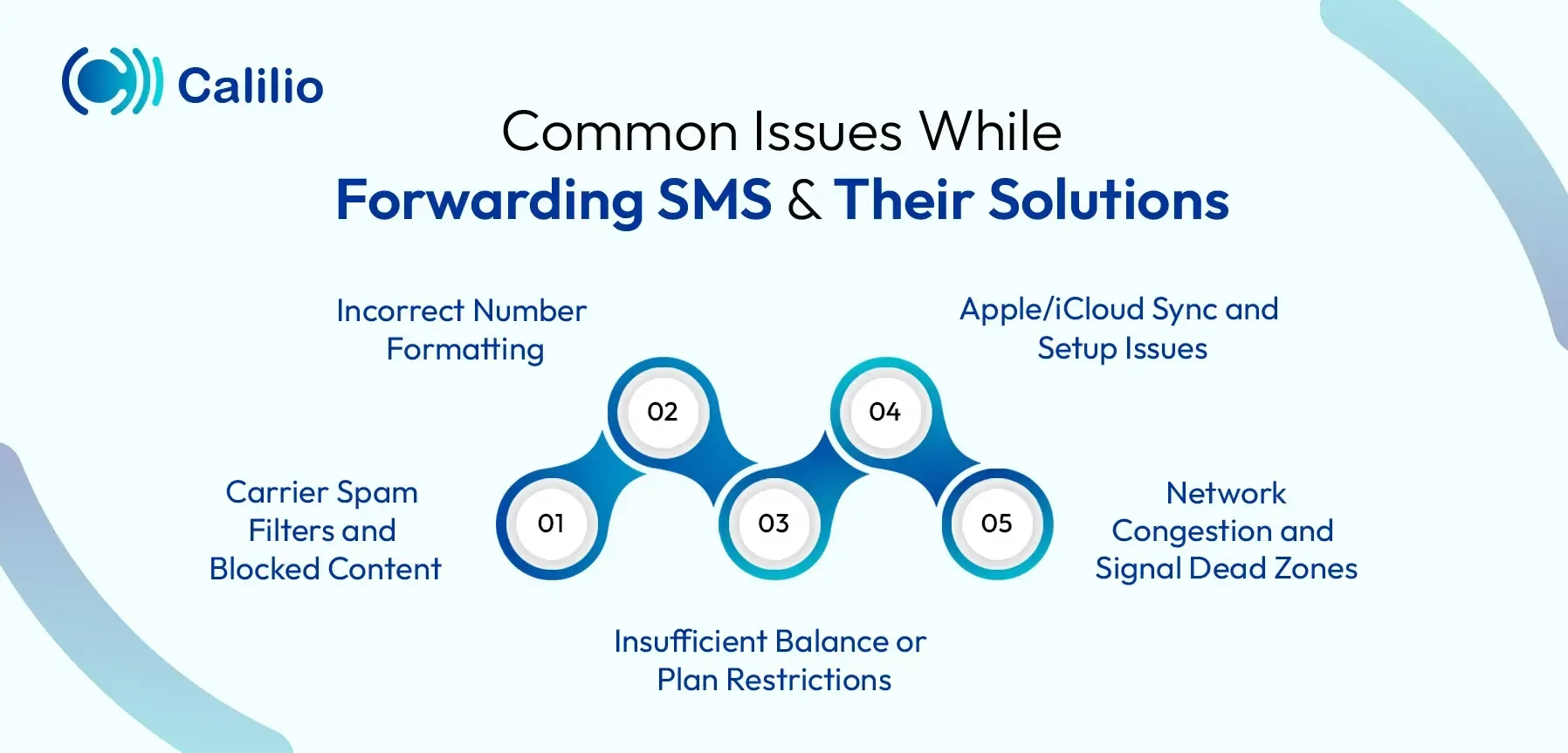
1. Carrier Spam Filters and Blocked Content
Most mobile carriers use automated filters to protect users from phishing. But, unfortunately, those filters also block forwarded messages, especially those containing links or repetitive "spammy" keywords. This is particularly common when forwarding the same text to multiple people at once, which the network interprets as a bulk marketing attempt.
Here are the possible solutions:
- Send a plain text "test" message to the recipient to see if the block is content-specific or number-specific
- Use the Manual Forwarding method for suspicious-looking texts, as manual actions are less likely to be flagged as "bot activity" than automated rules.
- If a message with a link fails to forward automatically, copy the text body and the URL separately and send them in two different messages.
- Contact your service provider to ensure your number hasn't been accidentally flagged for "suspicious activity" in case of high-volume automated forwarding.
2. Incorrect Number Formatting
When forwarding messages, especially to international recipients or via third-party apps, the system may fail if the number isn't in a globally recognizable format. Forgetting the "+" sign or the specific country code is one of the most common reasons for a "Delivery Failed" notification appearing on your screen. Without the proper prefix, your carrier might attempt to route the text locally, leading to a "number not found" error or sending it to the wrong person entirely.
Here are the possible solutions:
- Always use the full international format.
- Double-check for extra spaces or special characters (like parentheses or dashes) that some automated systems cannot process.
- Ensure the recipient's number is saved correctly in your contacts list before selecting it for forwarding.
3. Insufficient Balance or Plan Restrictions
Forwarding an SMS is treated as a completely new outgoing message by your carrier, meaning it consumes credits or counts against your monthly allocated limit. If you are on a prepaid plan with a zero balance or a limited "text-only" plan while trying to forward an image (MMS), the message will remain in a "Sending" status or show a “Failed to Send Message” notification.
Here are the possible solutions:
- Check your prepaid balance or monthly statement to ensure you haven't exceeded your SMS/MMS quota.
- Verify that your mobile plan specifically supports MMS if the message you are forwarding includes a photo, video, or group chat.
- Enable Roaming Data if you are traveling, as many carriers disable outgoing messages while you are on a foreign network to prevent overage charges.
4. Apple/iCloud Sync and Setup Issues
For iPhone users, the "Text Message Forwarding" feature relies on a perfect digital exchange between your Apple ID and your specific cellular phone number. If you’ve recently changed your iCloud password, updated your iOS, or toggled iMessage off, the link between your iPhone and your Mac or iPad can be severed. This often results in your phone receiving texts perfectly while your other Apple devices remain completely silent and out of sync.
Here are the possible solutions:
- Navigate to Settings > Messages > Text Message Forwarding and ensure the toggle is "ON" for each specific device.
- Sign out of your Apple ID on all devices and sign back in to refresh the security certificates and cloud connection.
- Verify that your iPad or Mac is connected to a stable internet connection (Wi-Fi or Cellular) to allow iCloud to push the messages across devices.
5. Network Congestion and Signal Dead Zones
Sometimes the issue isn't software-related but network-based. In particular, poor connectivity or a congested local cell tower can delay or prevent message delivery. This is common in crowded areas like stadiums or during peak commuting hours when thousands of devices are using the same bandwidth.
Here are the possible solutions:
- Toggle Airplane Mode ON for a few seconds and then OFF to force your phone to reconnect to the nearest, strongest tower.
- Move near a window or go outside to improve signal penetration and reduce interference.
- Wait a few minutes and try again, as network congestion is often temporary and clears once the local traffic subsides.
Best Practices for Forwarding Text Messages
Best practices for forwarding text messages include getting consent before sharing private chats, adding context for clarity, and verifying facts and links to avoid spreading misinformation. It’s also important to review forwarding settings regularly and avoid insecure methods when handling sensitive information.
- Always ask for the original sender’s permission before forwarding a private conversation to a third party.
- Add a short introductory note to the forwarded message to provide context for the recipient.
- Double-check the facts in urgent alerts or "viral" messages to avoid spreading hoaxes or outdated news.
- Confirm that any links within the text are safe and lead to legitimate websites before passing them along.
- Review your "Auto-Forward" settings regularly to ensure the recipients are still active and correct.
- Avoid using basic "SMS-to-Email" apps for sensitive client data, as they often lack professional encryption.
Conclusion
The objective is to deliver the information to the right recipient accurately, whether you are manually forwarding the text on an iPhone or Android, or setting up workflows to sync SMS with platforms like email or Slack. While built-in features support basic forwarding, privacy restrictions within modern mobile operating systems can present challenges for more advanced use cases.
For professionals and teams, depending solely on manual forwarding or unsecured third-party applications can lead to fragmented communication and potential security risks. These limitations often hinder productivity and create gaps in information flow, especially in collaborative environments where timely and organized communication is critical.



Summarize this blog with:
Frequently Asked Questions
What is the code to divert SMS?
Unlike voice calls, there is no universal MMI or USSD code to divert SMS messages across all carriers. You must use your device's native ‘Text Message Forwarding’ settings or a third-party automation app to redirect texts to another number.
Can you receive text messages on two phones?
How to disable SMS forwarding?
How to forward text messages on Google Voice?

Still have questions?
Can’t find the answer you’re looking for? Please chat with our friendly team.
Stay in the loop
Get the latest call insights, trends, and updates delivered straight to your inbox.
By subscribing, you agree to receive updates from Calilio.
You can unsubscribe anytime.
Enter the World of AI Business Phone System with Calilio
Improve your business operation with Calilio's advanced virtual phone system. Join today for a better way to connect.