What is Call Screening? How It Works & How to Enable It
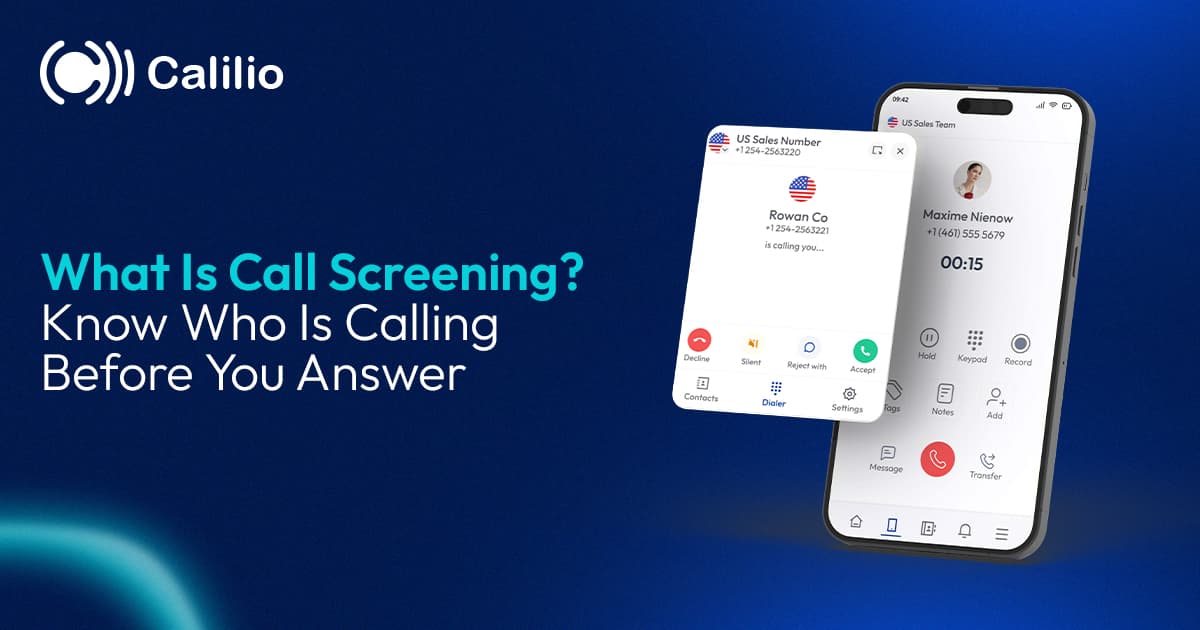

Incoming calls have become increasingly hard to manage due to spam and robocalls that disrupt workflows and personal time. Answering unknown numbers often wastes time or risks scams, while ignoring them might mean missing urgent matters or new customers.
Call screening solves this by acting as a first point of contact, identifying the caller and their purpose before you answer. This helps individuals avoid interruptions and allows businesses to stay accessible to important callers while filtering out the rest. Because of these clear benefits, it is essential to understand how these systems actually function.
So, we will explore what call screening is, how it works, and the types available for personal or business use. You will also learn to set it up on various devices to take control of your phone and communicate more effectively.
Key Highlights:
Call screening is the process of identifying a caller and understanding their intent before you decide to answer, helping individuals and businesses avoid unwanted or risky calls.
Modern call screening goes beyond basic caller ID by using AI to automatically answer unknown calls, collect caller details, and present real-time summaries for informed decision-making.
When a call from an unknown number comes in, the system detects it, asks the caller for their name and reason, transcribes the response, and lets you choose whether to answer, ignore, send to voicemail, or block the number.
There are multiple types of call screening, including manual screening, AI-powered automated screening, IVR-based screening for businesses, and third-party apps that rely on large spam-reporting databases.
Call screening can be easily set up on iPhone and Android devices (including Samsung and Google Pixel), with features and availability varying by device and region.
What is Call Screening?
Call screening, at its core, is the practice of assessing a caller’s identity before deciding whether to pick up the call or not. In the past, this process was largely limited to basic caller ID, which displayed only a name or phone number on the screen.
Today, call screening has evolved into a far more advanced and proactive approach to managing incoming calls. Modern call screening functions as a digital gatekeeper. Powered by artificial intelligence, it answers calls on your behalf, gathers essential information from the caller, and presents those details when your phone rings.
This approach transforms what was once a risk into an informed decision. This is because it allows individuals and businesses to prioritize important conversations while quietly filtering out the growing volume of spam and robocalls.
How Does Call Screening Work?
When a call from an unfamiliar number arrives, the call screening system automatically asks the caller who they are and why they’re calling, then instantly analyzes and summarizes their response. You see this info in real time and can decide whether to take the call, ignore it, send it to voicemail, or block the number.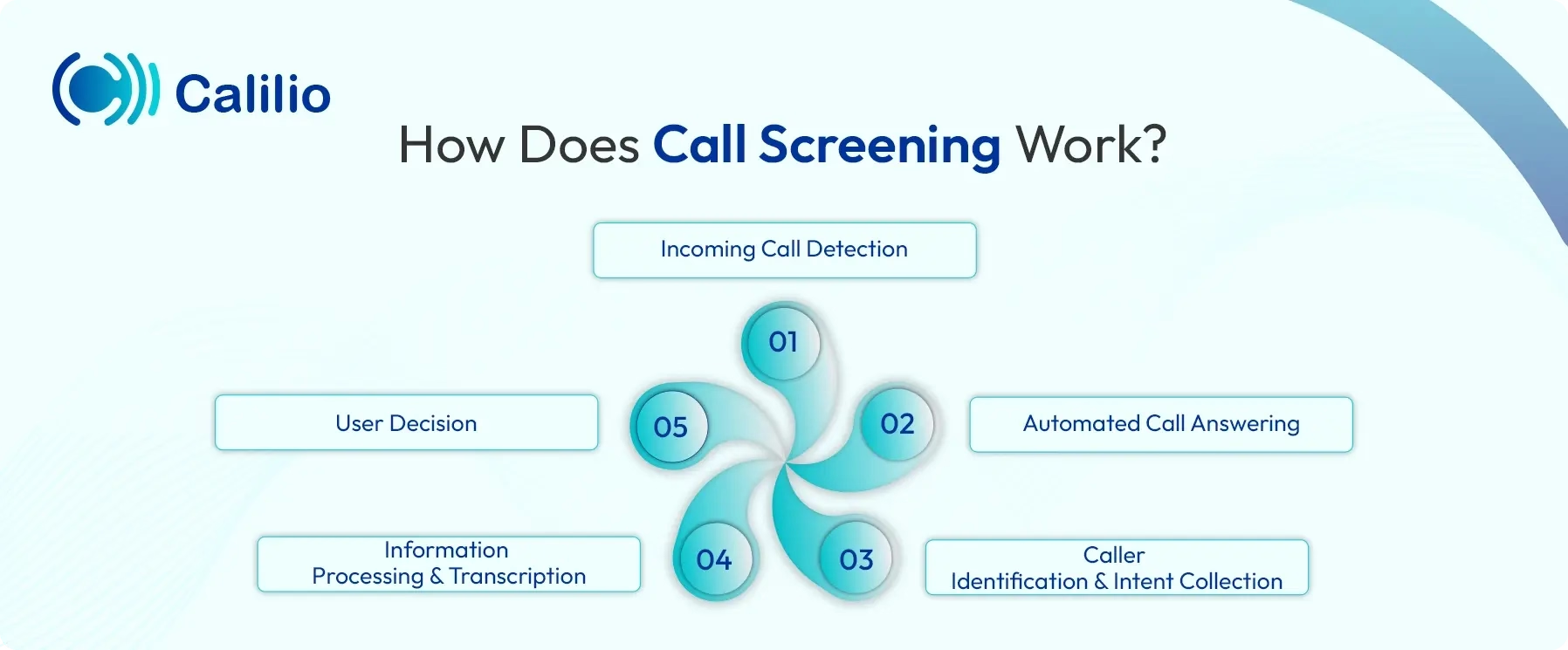
- Incoming Call Detection: When a call comes in from an unknown or unverified number, the call screening system is triggered instead of letting the phone ring immediately.
- Automated Call Answering: The system answers the call on your behalf using a recorded message or virtual assistant. The caller is informed that the call is being screened and is asked to provide basic details.
- Caller Identification and Intent Collection: The caller is prompted to state their name and the reason for calling. In some cases, this interaction is handled through voice prompts, while in others it may occur through text-based responses.
- Information Processing and Transcription: The system processes the caller’s response and may convert it into a text transcript or summary. This information is prepared in real time for your review.
- User Decision: You are shown the caller’s details on your device and can choose how to proceed, like answer the call, send it to voicemail, decline it, or block the number.
What are the Types of Call Screening?
Manual, AI-supported, Interactive Voice Response (IVR), and third-party app-based call screening are the main types of call screening.
1. Manual Call Screening
Manual call screening gives users direct control over every incoming call. It relies on caller ID information, location data, and spam likelihood indicators to help you assess a call before answering. Based on the details shown on your screen, you decide whether to pick up or decline the call. This approach works well for users who prefer to stay involved in every decision and want visibility without automation taking over.
2. AI-powered Automated Screening
AI-powered call screening removes the need for manual decision-making by handling calls automatically in the background. An on-device assistant answers unknown calls, asks callers to identify themselves, and evaluates responses in real time. Then, calls that show signs of automation, silence, or known spam patterns can be ended without alerting you, making this option ideal for users who want strong protection against interruptions.
3. IVR Screening
IVR-based screening is designed for business environments where call volume and efficiency matter. Through this tool, callers are guided through a structured menu that directs them to the appropriate department or resource. Plus, this method filters out low-intent calls and bots that cannot interact with the system, ensuring that live agents handle only relevant and qualified inquiries.
4. Third-party App-based Call Screening
There are several call screening apps that maintain large, constantly updated databases of reported spam and fraudulent numbers. When a number has been flagged repeatedly by other users, the app can label the call as spam risk or block it automatically, even if it’s the first time the number has contacted you. This method is highly effective against mass spam campaigns and can stop unwanted calls before your phone even rings.
How to Set Up Call Screening on Different Devices
Call screening can be enabled from call settings on iPhone and Android, with options varying by device and region.
1. For iPhone
Here are the detailed steps to enable the call screening feature on an iPhone:
- Open Settings and navigate to Apps, then select Phone.
- Tap Screen Unknown Callers to access screening options.
- Choose your preferred screening level.
- Ask Reason for Calling: Siri answers the call, asks the caller why they are calling, and displays a live transcription on your screen.
- Silence Unknown Callers: Calls from unknown numbers go directly to voicemail without ringing.
- Also, you can enable Live Voicemail so you can view real-time transcriptions as callers leave messages.
Note: The advanced features like “Ask Reason for Calling” are limited to certain countries only. So, confirm if the feature is available in your region or not.
2. For Android
To set up call screening on an Android, you need to go to the call settings of your phone and enable the call screening feature. Also, in some devices, this feature is automatically turned on as the default.
Here are the specific settings for different Android brands:
A. For Samsung
- Go to the Phone app.
- Tap on the three dots or bars on the top right corner.
- Tap on the Settings.
- Scroll to the Text Call option and tap on it.
- Toggle on the feature.
Note: To enable the feature, you may need to update the “Samsung on-device Resource” through the Google Play Store. Also, the feature is limited to the latest Samsung phones only.
B. For Google Pixels
- Open the Phone app.
- Tap More → Settings → Spam and Call Screen.
- Tap Call Screen.
- Choose your protection level.
- Maximum: Screens all unknown numbers, declines known spam.
- Medium: Screens suspicious calls, declines known spam.
- Basic: Only declines known spam.
- Choose which calls to screen.
- Pixel 6 and earlier: Tap Unknown call settings and select which callers to screen.
- Pixel 7 and later: Turn Automatically screen calls on or off and choose which calls to screen (Spam, possibly faked numbers, first-time callers).
Note: The call screening feature on the Google Pixel phone is limited to certain countries only. So, confirm if the feature is available in your region or not.
What are the Benefits of Call Screening?
Call screening helps individuals avoid stress, reduce scam risks, and stay focused by filtering unknown or unwanted calls while allowing important ones through. For businesses, it boosts productivity, routes calls more efficiently, improves customer interactions, and presents a more professional brand image.
1. For Individuals:
For everyday users, call screening is about staying in control of your time and reducing unnecessary stress.
- Less Stress from Unknown Calls: Seeing who’s calling and their purpose removes the pressure of answering blindly, so you can respond on your own terms.
- Defense Against Modern Scams: With the growth of voice imitation and AI-driven fraud, screening lets you check a caller’s intent through text before engaging.
- Fewer Disruptions, Better Focus: It filters out unwanted calls while still allowing important ones, like medical or delivery calls, to reach you.
- Stronger Data Protection: Since automated bots can’t get past screening, your number is less likely to be marked active and shared with spam networks.
2. For Businesses:
Call screening helps organizations to streamline communication and protect productivity.
- Improved Team Focus: By blocking spam and irrelevant calls, employees stay concentrated on meaningful work instead of constant interruptions.
- Smarter Call Handling: Screening tools and IVR systems help identify urgent or high-value callers and route them to the right person quickly.
- Smoother Customer Interactions: Agents receive key details upfront, so customers don’t have to repeat themselves.
- More Polished Brand Image: Automated greetings and screening create a professional impression, showing customers that your business is organized and efficient.
Conclusion
In a time when unwanted and suspicious calls are more common than ever, call screening offers a practical way to regain control over how you communicate. By acting as a smart filter between you and incoming calls, it reduces interruptions, minimizes scam risks, and ensures that only relevant conversations demand your attention. Whether through manual checks, AI-powered assistants, IVR systems, or third-party apps, call screening adapts to different needs and usage scenarios.
For individuals, it means fewer distractions and greater peace of mind. For businesses, it translates into better efficiency, improved customer experiences, and a more professional presence. As call volumes and spam tactics continue to evolve, adopting call screening is no longer just a convenience but an essential tool for smarter, safer, and more effective communication.
How do I turn off call screening on my iPhone?
To turn off call screening on your iPhone, go to Settings > Phone > Silence Unknown Callers and toggle the switch to off. This ensures all calls ring through, even from numbers not in your contacts.
How do I turn off call screening on my Android?
You can disable call screening on an Android by opening the Phone app, tapping the three dots (Settings), going to Spam and Call Screen > Call Screen, and changing your preferences for unknown calls to ring phone. However, the steps can vary depending on the brand of your phone.
What happens after a call is screened?
Once the screening ends, you can either pick up the call, decline it, send it to voicemail, send a quick-reply text, or block the caller. And, if you were the caller, a transcript of your voice response will be saved in the recipient's call history.
Can you tell if someone screens your call?
Yes, you can tell if your call is being screened if you hear a robotic or digital assistant voice immediately ask you to state your name or purpose.



Summarize this blog with:

Still have questions?
Can’t find the answer you’re looking for? Please chat with our friendly team.
Stay in the loop
Get the latest call insights, trends, and updates delivered straight to your inbox.
By subscribing, you agree to receive updates from Calilio.
You can unsubscribe anytime.
Enter the World of AI Business Phone System with Calilio
Improve your business operation with Calilio's advanced virtual phone system. Join today for a better way to connect.